Every culture has celebrations. What makes Eid different is that it is not a cultural artifact layered onto Islamic identity. It is a direct response to an act of worship. Understanding why Muslims practice Eid requires understanding what preceded it — because Eid is not where the story begins. It is where it culminates.
The Two Eids and What They Mark
Eid Al-Fitr arrives at the end of Ramadan. After thirty days of fasting — of restraining the body’s most basic impulses, of extended prayer, of charity and Quran — the community gathers in a single act of collective gratitude. The celebration is not for completing a challenge. It is for having been given the opportunity to do so.
Zakat Al-Fitr, the obligatory charity given before the Eid prayer, ensures that no member of the Muslim community enters the day without food. The celebration is deliberately communal, not individual.
Eid Al-Adha commemorates one of the most significant moments in prophetic history — Ibrahim’s willingness to sacrifice his son Ismail, and Allah’s mercy in providing a ram in his place. The Qurbani (sacrifice) that Muslims perform during Eid Al-Adha is a physical reenactment of submission. The meat is distributed in thirds: family, neighbors, and the poor.
Both Eids share an architecture. They begin with Ghusl (ritual bathing), proceed to the Eid prayer, and continue with family, food, and charity. Neither is a secular holiday. Both are acts of worship wearing the clothes of celebration.
Why Muslims in the West Celebrate Eid Differently — and Why That Matters
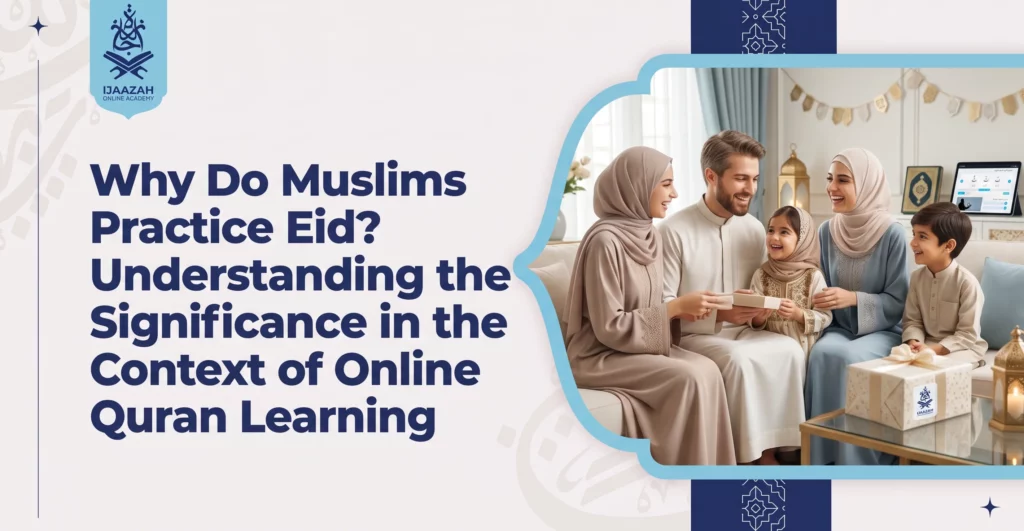
For expat Muslim families in the USA, Canada, UK, and Australia, Eid presents a particular set of tensions. Schools do not close. Employers do not grant automatic leave. Supermarkets do not stock specialty Eid foods by default. The celebration often requires deliberate effort that Muslims in majority-Muslim countries never need to exert.
This effort is itself theologically meaningful. Practicing Eid consciously — requesting the day off, decorating the home, preparing the meal, attending the prayer in a hired community hall — is an act of identity maintenance. It communicates to children that Islamic practice does not require a Muslim-majority environment to be real.
Many Western Muslim families have found that the intentionality forced upon them by minority status has actually deepened their Eid observance. When nothing is automatic, everything is chosen.
The Role of Quran and Islamic Knowledge in Eid Preparation
Understanding why Muslims practice Eid is inseparable from understanding the worship that precedes it. A child who has not learned why Ramadan is observed will struggle to grasp why Eid Al-Fitr carries the weight it does. A family unfamiliar with the story of Ibrahim ﷺ will observe Eid Al-Adha as tradition without theological grounding.
Online Quran academies play a specific role in this preparation. Tutors who teach both recitation and Islamic studies give families the intellectual framework to celebrate Eid with depth. The prayer itself, the takbeerat of Eid Al-Adha, the specific duas of the morning — these are learned, not absorbed through cultural osmosis when you live outside the Muslim world.
Know a family navigating Eid in a non-Muslim country? Share this post. Spreading knowledge is a form of Sadaqah Jariyah.
The 5-Minute Challenge: Before the next Eid, spend five minutes with your children explaining what the celebration marks — not the food, the clothes, or the gifts, but the worship it responds to. Ask them: “What did we do to earn this day?”
Ready to Begin? Book a Free Trial