Start smaller than you think
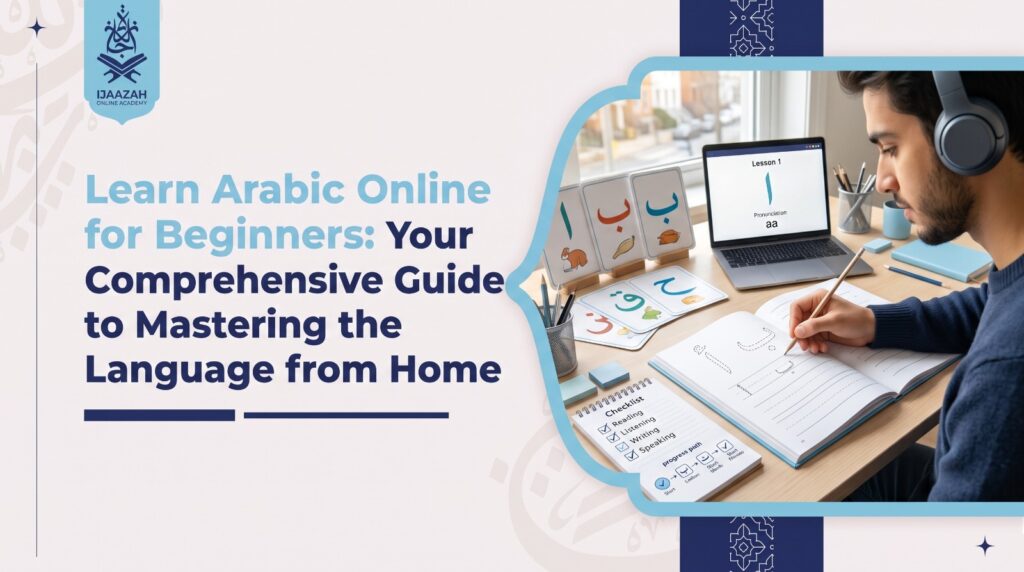
Beginning Arabic does not mean learning every word, dialect, and grammar rule at once. Your first goal is to recognise the script, make the main sounds, and build a short routine you can repeat. A clear first month is more useful than a large course list.
A 30-day plan
Week 1 focuses on letters and vowel marks. Week 2 adds reading short words aloud. Week 3 introduces useful phrases or Quranic vocabulary based on your goal. Week 4 combines reading, listening, and a short conversation or teacher check-in. Keep each practice session to ten or fifteen minutes so you can repeat it consistently.
Choose the right beginner class
Look for a course that explains the starting level, gives live correction, and offers small review tasks. Do not begin advanced grammar before you can read comfortably. A teacher should be able to show you what progress looks like by the end of the first month.
Common beginner questions
Can I learn Arabic online without prior experience? Yes, if the course starts with the script and gives corrective feedback. How often should I practise? Short practice on most days is usually easier to sustain than one long session each week.
A practical next step
Choose one small action from this guide and repeat it for the next week. Write down the question that remains, then bring it to a qualified teacher so your learning stays connected to sound guidance.
The best progress comes from a clear level, a stable routine, and feedback you can apply. Let your next lesson give you a specific target rather than another long list of information.
Ready to start?
Do not leave learn arabic online for beginners as another article you read and forget. Visit Ijaazah’s Arabic Language Courses page, choose the level that fits you, and book your free assessment today. You will get a clear starting point, a course recommendation, and a practical plan to begin with confidence.