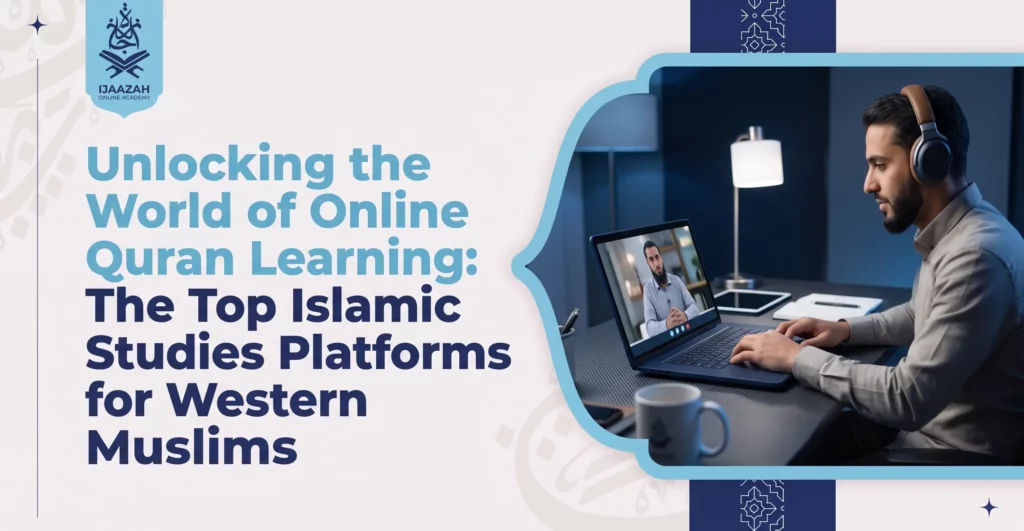
Finding authentic Islamic education in the West presents a unique challenge. Many Muslim families face the reality that local resources—whether mosques, Islamic schools, or qualified instructors—are either geographically distant or culturally misaligned with their Western context. Online Islamic studies platforms have fundamentally transformed this landscape, making it possible for anyone with an internet connection to access Azhari-certified instruction and structured curricula without leaving home.
The demand for remote Islamic education has surged dramatically in recent years. Muslims across the USA, Canada, UK, and Australia now recognize that online learning isn’t a compromise—it’s often superior to scattered local options. A mother in Vancouver can work with a certified Egyptian educator. A teenage student in London can study Tajweed with a female tutor who understands her cultural position as a young Western Muslim woman. These possibilities would have been unimaginable fifteen years ago.
Why Online Platforms Dominate Islamic Learning Today
Convenience and Flexibility Stand Above All Else
Life in Western countries moves at breakneck speed. Parents juggle work, school runs, and household responsibilities. Students balance university coursework, part-time jobs, and social commitments. Traditional Islamic education—requiring attendance at specific times in physical locations—simply doesn’t fit this reality. Online platforms solve this by offering asynchronous options, recorded lessons, and scheduling that adapts to the learner rather than forcing the learner to adapt.
A structured study schedule becomes achievable. You can attend a live class at 10 PM if your time zone demands it. You can review a recording on Sunday afternoon when your mind is fresh. You can pause your studies during exam season and resume when life settles. This flexibility isn’t superficial—it’s the difference between a student actually engaging with Islamic knowledge or abandoning the attempt entirely.
Access to Diverse, Qualified Teaching Staff
Many Western Muslim families specifically seek female tutors. This preference isn’t arbitrary; it reflects both cultural comfort and practical pedagogical considerations. A young girl learning Quran recitation may feel more at ease with a female instructor. A mother studying Islamic jurisprudence might prefer to ask sensitive questions without the formality of mixed-gender environments. Reputable online platforms address this demand directly by employing qualified female educators alongside male instructors—something most isolated local communities simply cannot provide.
Teaching credentials matter immensely. The difference between someone who memorized the Quran and someone trained in Islamic pedagogy is profound. Ijaazah.com, for example, employs Azhari-certified tutors—educators trained at Al-Azhar, Islam’s most prestigious institution for Quranic sciences. This certification carries weight. Parents know their children aren’t learning from enthusiasts; they’re learning from scholars.
The Architecture of Effective Online Islamic Education
Interactive Tools Transform Passive Learning into Active Engagement
The most effective platforms don’t simply stream lectures. They layer technology strategically. Video conferencing replicates the one-on-one teaching dynamic essential to Quranic instruction. Interactive quizzes test retention without judgment, allowing students to identify gaps. Apps synchronized across devices let learners review anywhere—during commutes, between tasks, in quiet moments. Recording functionality serves multiple audiences: those who missed the live session, those who need to review specific sections, and those managing unpredictable schedules.
Curriculum Structure Separates Serious Platforms from Hobbyist Offerings
Any person can post Islamic content. Not every person can design a coherent learning progression. Quality platforms organize their curricula explicitly, mapping how Tajweed fundamentals lead to practical application, how Arabic grammar connects to Quranic comprehension, how Tafsir deepens when students understand both linguistic and historical context. A structured syllabus prevents students from drifting, cherry-picking random topics instead of building foundational competence.
Progression matters psychologically. Students need visible advancement. They need to see themselves moving from beginner to intermediate to advanced—not floating indefinitely in an ambiguous middle space. Platforms that track this progress, celebrate milestones, and adjust difficulty incrementally keep learners motivated.
Community Creates Belonging in Isolated Contexts
The isolation of Western Muslim life is real. Many Western Muslims grow up in neighborhoods where Islamic practice is marginal. Schools, workplaces, and even extended families may not share or understand their religious commitments. Online community features—forums where students discuss challenges, group classes where learners interact with peers, social media connections to the broader student body—address this psychological dimension that academic content alone cannot touch.
A student memorizing Surah Yaseen feels differently when connected to others memorizing in parallel. Parents exchanging strategies for Islamic parenting in secular societies find validation. Teenagers navigating identity issues encounter peers facing identical pressures. Community doesn’t just add social value; it reinforces commitment to the learning itself.
Navigating Global Time Zones Without Friction
Class Scheduling Must Match Geographic Reality
Time zone complexity could paralyze a global learning platform. Yet elite providers handle it seamlessly. They offer multiple class times—early morning slots for early risers, evening slots for those finishing work, weekend options for maximum flexibility. Some provide both: learners choose the session matching their week.
The mathematics are straightforward but require discipline. A platform serving North America, Europe, and the Middle East simultaneously can’t schedule everything at noon London time. Sophisticated platforms create staggered schedules that cover most major time zones, with recorded sessions available for outliers.
Recorded Sessions Dissolve the Time Zone Problem Entirely
The single most transformative feature for global Islamic education is the ability to record and archive live instruction. A student unable to attend the 6 PM UK session can watch the recording Wednesday morning. No learning is lost. The experience differs slightly—no real-time Q&A—but the core instruction remains intact. This democratizes access in ways that traditional learning environments never could.
Cultural Sensitivity as a Foundation, Not an Afterthought
Content Must Reflect the Lived Experience of Western Muslims
Western Muslims inhabit a specific cultural position. They navigate secular societies while maintaining Islamic commitments. They may face discrimination or misunderstanding about their faith. They’re often multilingual, straddling languages and cultural frameworks. Teaching materials designed for Muslims in Saudi Arabia or Egypt—while valuable for foundational knowledge—don’t automatically address the lived texture of Western Islamic practice.
Thoughtful platforms incorporate this reality. They include discussions of how Islamic ethics apply to Western professional environments. They address questions young Muslims actually ask: “How do I balance my career with prayer obligations?” “What does modesty mean in Western fashion?” “How do I explain Ramadan to non-Muslim colleagues?” They validate the legitimacy of these questions rather than treating them as secondary concerns.
Learning Styles Vary Across Cultural Backgrounds
A student raised in Egypt may thrive with traditional memorization-centered pedagogy. A student raised in Canada, accustomed to interactive classrooms and Socratic questioning, may struggle with that approach. Excellent platforms acknowledge this diversity. They offer multiple routes to competence: some students learn through intensive recitation, others through detailed linguistic analysis, others through narrative and contextual study.
This flexibility respects cognitive diversity without diluting academic rigor. It’s not “dumbing down” content; it’s recognizing that multiple pathways lead to the same destination of genuine understanding.
The Practical Reality of Selection
Choosing among platforms requires evaluating several concrete dimensions. What are the tutor credentials? Are they certified? How transparent is the platform about this? What does a typical lesson structure include? Does the platform provide progress tracking, and can parents and students actually understand the metrics?
Pricing varies dramatically. Some platforms operate on a sliding scale to serve diverse economic backgrounds. Others charge premium rates reflecting premium credentials. Neither is inherently wrong; the question is whether the offering matches the investment.
Trial periods matter. Reputable platforms confidently offer a free trial or initial assessment so families can evaluate fit before committing. This removes pressure and allows informed decision-making.
Moving Forward with Islamic Excellence
The availability of top-tier online Islamic studies platforms has erased the excuse that Western location bars access to quality education. Muslim children in Portland, Manchester, and Brisbane now have equivalent—sometimes superior—access to instruction as children in traditional Islamic schools.
The decision to pursue serious Islamic studies online is no longer a reluctant compromise. It’s increasingly the optimal choice for busy families who refuse to accept mediocrity in their children’s religious education. The platforms exist. The tutors are qualified. The technology works. What remains is your commitment to taking advantage of these opportunities.
3-PART CTA FRAMEWORK
1. The Sadaqah Jariyah Share
Know someone raising Muslim children in a Western context and wrestling with how to provide authentic Islamic education? Share this article. Spreading knowledge of quality learning resources is a form of Sadaqah Jariyah—knowledge that continues benefiting others long after you’ve shared it.
2. The 5-Minute Challenge
Research one online Islamic studies platform this week. Read reviews from actual students. Examine the tutor profiles. If something resonates, sign up for a free trial. You’ll invest five minutes and gain clarity about what authentic online Islamic education actually looks like.
3. The Soft Sell (Direct Links)
Ready to explore structured Islamic studies with certified tutors?
—Book a Free Trial: Schedule your first session with an Azhari-certified educator at no cost. Experience the teaching methodology firsthand before any commitment.
—Test Your Level: Assess your current Islamic knowledge and Arabic proficiency. Understanding your starting point clarifies which curriculum level matches your needs.