Every Friday, from Dearborn to Bradford to Western Sydney, Muslims open their phones or their mushafs to the same chapter. Some finish it before Jumuah, others recite it slowly across the afternoon, and many cannot quite explain why this surah in particular earned its weekly place. So, what is Surah Kahf? It is the eighteenth chapter of the Quran, 110 verses long, revealed in Makkah — and it reads like a survival manual for faith under pressure.
That description matters for Muslims who live as a minority. The surah speaks to young people who hold on to belief in a society that does not share it, to people tested by wealth, to students chasing knowledge, and to those handed power. Each of those tests sits in a Western Muslim’s week, not in some distant age.
What is Surah Kahf? Its Place in the Quran and the Muslim Week
A Makkan Surah Built Around Four Narratives
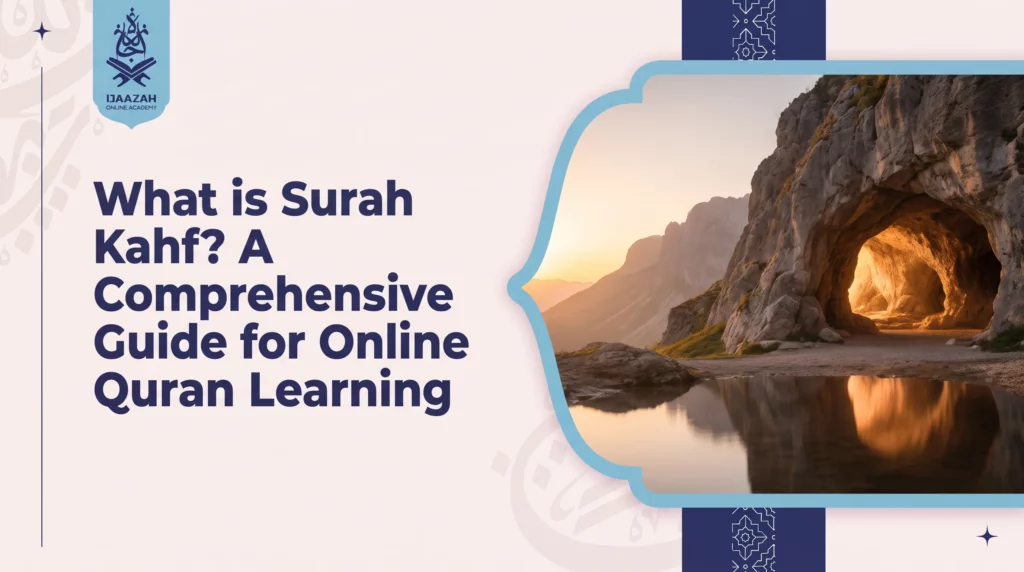
Al-Kahf means “the Cave,” named after its opening story. It sits in the fifteenth and sixteenth juz, and most scholars classify it as Makkan, revealed before the Hijrah during years of persecution. The surah opens with praise of Allah, who sent down the Book “and has not made therein any deviance” (Quran 18:1), and closes with a reminder that whoever hopes to meet his Lord should do righteous work and associate no one in worship with Him (Quran 18:110).
Between those two anchors lie four stories: the young believers who fled to the cave, the owner of the two gardens, Musa (peace be upon him) and the knowledgeable servant of Allah, and Dhul-Qarnayn, the just ruler who travelled east and west.
The Friday Recitation and the Protection From the Dajjal
The Friday practice rests on a narration reported by al-Hakim and al-Bayhaqi, which scholars such as al-Albani graded authentic: whoever recites Surah Al-Kahf on Friday, a light will shine for him between the two Fridays. Many scholars add that the recitation may begin after Maghrib on Thursday, since the Islamic day starts at sunset, and continue until Maghrib on Friday.
A second virtue sits in Sahih Muslim. The Prophet ﷺ said that whoever memorises ten verses from the beginning of Surah Al-Kahf will be protected from the Dajjal (Sahih Muslim 809). In the long hadith describing the Dajjal, he also instructed believers who meet him to recite the opening verses of this surah against him (Sahih Muslim 2937). Scholars see a thread here: the surah addresses the very trials the Dajjal will exploit.
Historical Context and the Themes That Hold the Surah Together
What Books of Tafsir Say About the Revelation
Several narrations in the books of seerah and tafsir mention that the Quraysh, seeking to test the Prophet ﷺ, sent envoys to the rabbis of Madinah, who suggested three questions — about young men who disappeared in ancient times, about a man who travelled to the ends of the earth, and about the soul. The chains of these reports are debated among hadith scholars, so they are best read as background rather than settled fact. What is certain is the answer Allah gave, and the lesson placed inside it: never say about anything, “I will do that tomorrow,” without adding “if Allah wills” (Quran 18:23 and 18:24).
Four Trials Every Believer Meets
Scholars of tafsir often group the stories around four fitnahs:
- Faith. The youths of the cave risked everything rather than worship other than Allah, and they prayed: “Our Lord, grant us from Yourself mercy and prepare for us from our affair right guidance” (Quran 18:10).
- Wealth. The owner of two gardens forgot the Giver of his harvest, and woke to find it ruined (Quran 18:32 to 44).
- Knowledge. Musa, a great prophet, travelled to learn from a servant whom Allah had taught, and learned humility in the process (Quran 18:60 to 82; Sahih al-Bukhari 122).
- Power — carried by Dhul-Qarnayn, who built a barrier against Ya’juj and Ma’juj and attributed his success to his Lord’s mercy (Quran 18:98).
Why the Themes Land Hard in the West
A teenager in a secular high school understands the cave story better than any adult expects. Professionals climbing the career ladder recognise the man with the gardens. University students meet the humility lesson of Musa every time a professor’s certainty collides with revelation. The surah gives each of them a mirror, and the mirror is honest.
Allah also tells the Prophet ﷺ to keep himself patient with those who call upon their Lord morning and evening (Quran 18:28). For Muslims scattered across suburbs and small towns, that verse doubles as an instruction to find good company, even if it has to begin online.
How Surah Kahf Fits Into Online Quran Learning
A Natural Text for Recitation, Tajweed, and Memorisation
Surah Al-Kahf is long enough to train stamina and varied enough to exercise almost every tajweed rule. Its opening ten verses make an ideal memorisation target for adults, and its stories give children something to picture while they learn. Many students work through it in stages: the first ten verses, then the cave story, then the remaining narratives.
Learning Around a Busy Western Schedule
A full recitation takes most readers between thirty and fifty minutes. That time is easy to find on a quiet Friday and hard to find on a working one. Online study helps in two ways — a tutor can correct your recitation so that the weekly reading flows faster, and flexible booking means lessons fit around work, school, and Jumuah. Ijaazah schedules one on one sessions around your own time zone, whether Friday afternoon lands in Toronto, London, or Perth.
Female Tutors for Sisters and Young Learners
Sisters who want to perfect their Friday recitation, or mothers teaching daughters the first ten verses, often prefer a female teacher. Ijaazah’s Azhari certified female tutors teach recitation, memorisation, and meaning in private sessions. A comfortable setting makes it easier to repeat a difficult passage without embarrassment.
Common Questions About Surah Kahf
What Are the Main Lessons From Surah Kahf?
Hold firm to tawhid even when you are few. Treat wealth as a trust. Approach knowledge with humility. Use power for justice. Say “in sha Allah” about your plans. Remember that this world is adornment and that “the enduring good deeds are better to your Lord” (Quran 18:46).
Why Is Surah Kahf Recommended on Fridays?
The authenticated narration promises light between the two Fridays for the one who recites it. This weekly rhythm also keeps its lessons fresh, which scholars link to its protective role against the trials of the Dajjal.
Can I Recite It Across the Day Rather Than in One Sitting?
Yes. Nothing in the narration requires a single sitting. Many working Muslims read a portion before work, a portion at lunch, and finish after Asr.
How Do Cultural Backgrounds Shape Understanding?
Families from different regions attach different customs to Friday, such as gathering to recite together or listening to a particular reciter. Those habits are fine as long as they stay within what is authentic. The meaning itself should come from reliable tafsir, such as Ibn Kathir or as-Sa’di, rather than local stories.
What Should I Look for in an Online Platform?
A qualified teacher with a verifiable chain of study, live correction, scheduling that respects your time zone, and a female tutor option if you need one. One trial lesson will answer most of these questions within thirty minutes.
Practical Tips for Learning Surah Kahf Online
Resources Worth Using
Quran.com provides the full Arabic text, audio by several reciters, and word by word meanings, which makes it a strong companion between lessons. Pair it with a trusted English tafsir so that each story connects to its lesson.
Choosing the Right Tutor
Ask how the tutor corrects mistakes, whether they can teach meaning as well as recitation, and whether they have taught learners at your level. Sisters should confirm at booking that a female tutor is available.
A Time Plan for Busy Muslims
- Split the surah into four parts and read one after each prayer from Fajr to Asr on Friday.
- Listen to the next portion during your commute.
- Memorise one of the first ten verses every week — in under three months, the protection described in Sahih Muslim 809 is within reach.
The Cave Still Offers Shelter
The youths in the cave had no army, no wealth, and no public support. They had sincere faith and a prayer for guidance, and Allah preserved them. The same door is open for a believer in any Western city today. Open Surah Al-Kahf this Friday, read it with attention, and ask Allah for the mercy and right guidance those young men requested.
Carry the Friday Light Forward
Sadaqah Jariyah Share
Someone in your family chat group has been meaning to start the Friday habit. Send them this article before Thursday evening. Every Friday they recite because of your reminder adds to your reward.
The 5 Minute Challenge
Open Surah Al-Kahf and read verse 10 — the dua of the youths — slowly, five times. Learn its meaning, then make it your own dua before you sleep tonight.
Take the Next Step
Book a Free Trial with an Azhari certified tutor to perfect your Kahf recitation, or Take the Test Me Assessment to find your current level.