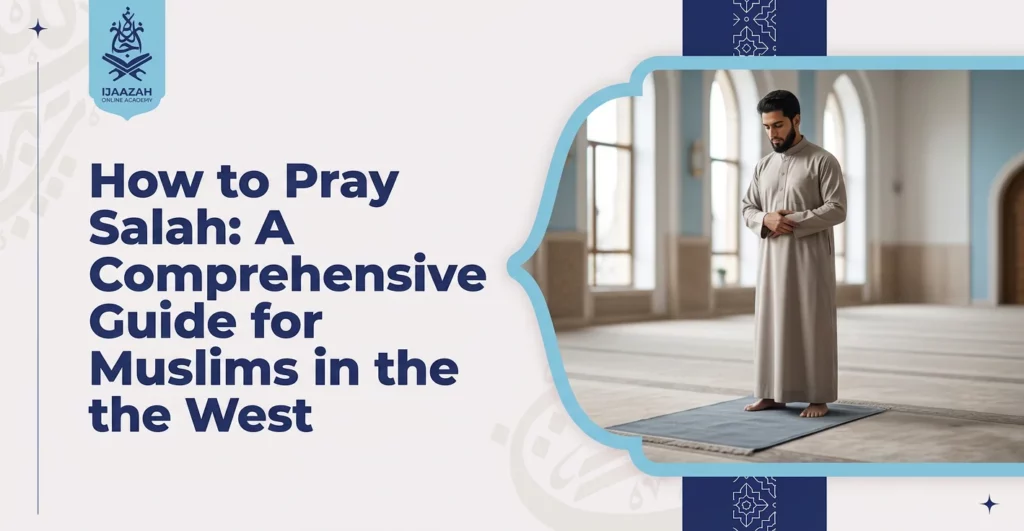
Prayer is not peripheral to Islam. It is not a ritual reserved for special occasions or a practice that scales up or down with religiosity. Salah is the pillar upon which every other act of worship rests — and learning how to pray Salah correctly is therefore among the most consequential acts of Islamic education a Muslim can undertake.
For new Muslims, and for Muslims who never received formal instruction in prayer, the mechanics can feel overwhelming at first. The Arabic recitations, the physical postures, the number of rakats per prayer — each prayer carries its own structure. Once that structure is internalized, however, it becomes a form of rest as much as a form of worship.
Before the Prayer: Wudu and Its Conditions
No Salah is valid without ritual purity. Wudu (ablution) is the act of washing that prepares the body and, by extension, the attention for prayer. The steps are sequential and precisely defined:
- Intention (Niyyah) — formed in the heart, not spoken aloud in most scholarly positions
- Washing the hands three times
- Rinsing the mouth three times
- Sniffing water into the nostrils and blowing it out, three times
- Washing the face three times
- Washing the right arm to the elbow three times, then the left
- Wiping the top of the head once
- Wiping the ears once, inside and out
- Washing the right foot to the ankle three times, then the left
Wudu is broken by anything that exits the body, by sleep, by loss of consciousness, and by certain other conditions detailed in fiqh. Maintaining Wudu throughout the day is not required — only for the prayer itself.
The Five Daily Prayers and Their Structure
Fajr (dawn): 2 rakats. Prayed between the first light of dawn and sunrise. The quietest prayer of the day, carrying a particular spiritual weight in hadith literature.
Dhuhr (midday): 4 rakats. Prayed after the sun passes its zenith until mid-afternoon. For Muslims in offices or schools, this often requires requesting a brief break.
Asr (afternoon): 4 rakats. Prayed from mid-afternoon until just before sunset. Islamic tradition attaches particular emphasis to this prayer — the Quran references it specifically as “the middle prayer.”
Maghrib (sunset): 3 rakats. Prayed immediately after sunset. Its window is short — approximately seventy to ninety minutes — making it among the prayers most often missed in hectic Western schedules.
Isha (night): 4 rakats, followed by optional Witr. Prayed from the disappearance of twilight until midnight, though performing it before sleep is strongly recommended.
How to Pray Salah: Inside a Single Rakat
Each rakat follows the same sequence:
- Takbeer Al-Ihram: Raise both hands to shoulder level, say “Allahu Akbar,” and enter the prayer
- Qiyam: Standing recitation — Al-Fatiha first, then a chosen surah in the first two rakats
- Ruku: Bowing from the waist, back parallel to the ground, hands on knees
- Itidal: Rising from ruku, standing briefly upright
- First Sujood: Prostration — forehead, nose, both palms, both knees, and toes on the floor
- Brief sit: A short sitting between the two prostrations
- Second Sujood: A second prostration identical to the first
At the end of every two rakats, sit for the Tashahhud. At the final rakat, complete the Tashahhud, add salutations upon the Prophet ﷺ, then close with Tasleem: turning the head right and saying “Assalamu Alaykum Wa Rahmatullah,” then left.
Maintaining Salah in the West
Prayer time apps for iOS and Android calculate accurate prayer times for any city in any time zone, removing the calculation burden entirely. Many Muslim expats in Western cities have found that establishing a single physical space for prayer at home — a dedicated prayer mat in a quiet corner — makes the transition into Salah considerably easier.
For Muslims who want to learn how to pray Salah correctly with proper pronunciation and posture, working with a qualified online tutor provides the real-time correction that no app or written guide can replicate.
Know a new Muslim or someone who has never formally learned how to pray Salah? Share this post. Spreading knowledge is a form of Sadaqah Jariyah.
The 5-Minute Challenge: Pray one rakat right now with complete presence. No rushing. Recite Al-Fatiha slowly enough to understand every word. Let each posture settle before moving to the next. That single rakat of quality teaches more than ten rushed ones.
Ready to Begin?Book a Free Trial