The Hafiza — a Muslim woman who has committed the entire Quran to memory — occupies a station of great honour in Islam. And yet, for many Muslimah students, the path to becoming a Hafiza has felt inaccessible: traditional Hifz schools designed primarily for male students, limited access to female teachers, the weight of family responsibilities, and the assumption that this goal belongs to childhood rather than adult life.
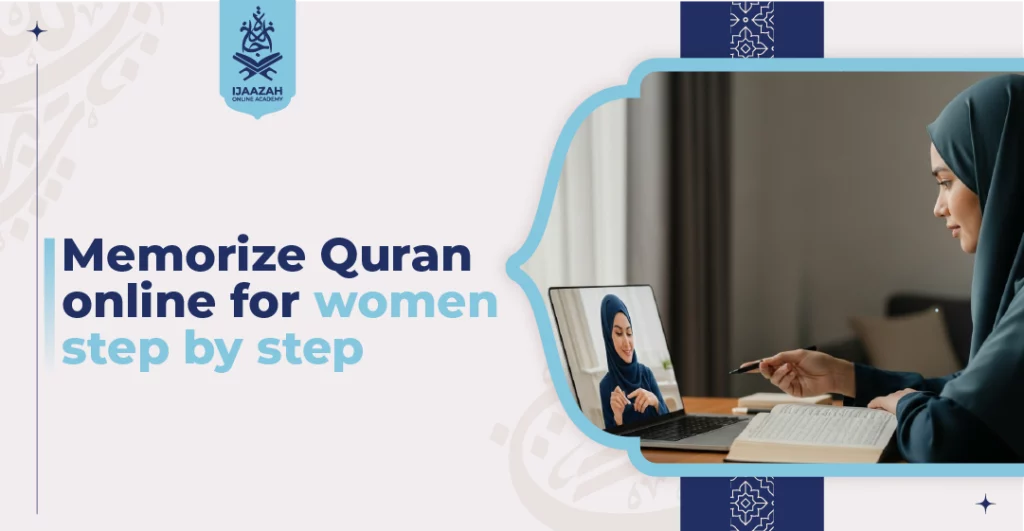
Online Hifz programmes for women are changing all of this. Today, Muslim women of all ages and backgrounds can memorise the Quran step by step, with certified female teachers, flexible scheduling, and a supportive learning environment designed around their specific needs.
Why Muslim Women Are Pursuing Hifz Now More Than Ever
The barriers that once restricted women’s access to Quran memorisation are falling. Qualified female Quran teachers with Ijazah in Hifz are now available online across multiple time zones — what was once a rarity is now readily accessible for Muslimah students in the UK, USA, Canada, Australia, and beyond. Online Hifz classes can be arranged around school runs, professional commitments, household responsibilities, and nursing schedules in ways that residential schools cannot accommodate. And communities of Muslim women pursuing Hifz are growing visibly, making what once felt like an exceptional achievement increasingly understood as an attainable goal.
A Step-by-Step Overview of the Online Women’s Hifz Journey
The journey begins with assessment and goal setting — a recitation evaluation to determine an appropriate starting point and goals (full Hifz, partial Hifz, or specific Surahs) based on the student’s realistic timeframe. If the student’s Tajweed has significant errors, these are addressed before memorisation begins, since memorising with incorrect Tajweed embeds errors that are very difficult to correct later. Most students then begin with Juz Amma (the 30th Juz), establishing a three-part daily routine of new memorisation (Sabaq), recent revision (Sabaq Para), and older revision (Dhor). Regular assessment at the completion of each Juz reinforces retention and marks a significant milestone.
Addressing the Unique Challenges Women Face in Hifz
Interruptions from family life — Ramadan, pregnancy, nursing, illness, and family emergencies — are a reality for many Muslimah students. A good teacher and programme build flexibility into the curriculum rather than treating interruptions as failures. The Hifz journey is measured in years, not weeks — pauses are part of the process. Consistency, not speed, is the foundation: missing a day of revision is far more damaging than progressing slowly but steadily. Women are encouraged to build Quran revision into their daily rhythm — after Fajr, during a child’s nap time, or in the evening after Isha.
How Online Hifz Is Different for Women at Ijaazah.com
Ijaazah.com’s women’s Hifz programme is designed with the specific realities of Muslimah students in mind. It offers certified female teachers with verified Ijazah in Hifz and Quranic recitation, one-to-one sessions for personalised pacing and individual correction, flexible scheduling including early morning, daytime, and evening slots, progress tracking so students and teachers can review milestones and plan revision schedules, and a supportive women-only learning environment that encourages open questions and genuine pastoral care. This is not just an online class — it is a community of women committed to the Quran.
Ready to begin?
Disclosure: Content provided by Ijaazah.com. The free trial is offered at no cost through Ijaazah’s learning management system. Teachers hold verified Islamic credentials.