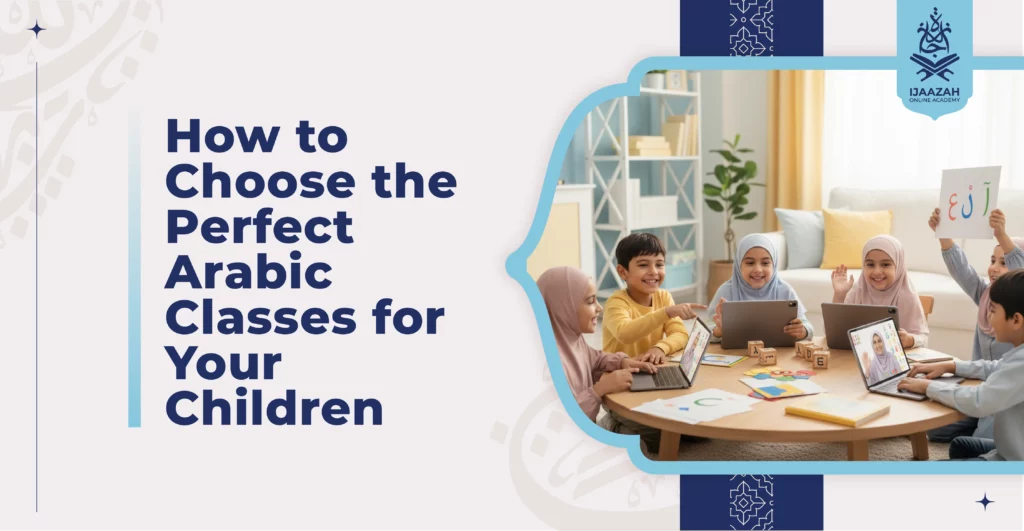
Choosing the right Arabic classes for kids is one of the most important educational decisions you can make. Arabic is not just a language — it is the key to understanding the Quran, Islamic studies, classical heritage, and an entire world of meaningful communication. But with so many learning styles and online options available today, parents often struggle to determine what perfect Arabic instruction looks like for their child.
The perfect Arabic class should be safe, structured, child-friendly, and taught by patient, qualified teachers who understand how children learn. It should also nurture a love for the language rather than pressure or overwhelm. This guide outlines what parents need to know to make the best choice — and how Ijaazah Academy supports families with high-quality, child-centered Arabic education.
What Makes Arabic Challenging for Children — and Why Choosing the Right Class Matters
Arabic requires understanding:
- unique letter shapes
- articulation points that may not exist in other languages
- reading from right to left
- grammar structures unfamiliar to non-native speakers
- vocabulary with deep root patterns
Children pick up languages quickly — but only when taught through age-appropriate, gentle, consistent guidance. A great Arabic class transforms difficulty into discovery, and confusion into curiosity.
The right class builds confidence. The wrong one can create long-term frustration.
1. Look for Teachers Who Specialize in Teaching Children
Children learn differently from adults — they need repetition, warmth, encouragement, visual support, and short, structured lessons. The perfect Arabic class begins with teachers who understand:
- how to simplify concepts
- how to encourage shy learners
- how to maintain attention gently
- how to correct errors without embarrassment
- how to motivate children through positive reinforcement
Ijaazah Academy selects teachers trained specifically for children, ensuring kindness, patience, and well-designed teaching methods.
2. Choose a Program That Teaches Arabic Step by Step
Children progress best when learning follows a clear path. The ideal Arabic curriculum for kids should move through:
Stage 1: Alphabet Recognition
Identifying letters in all forms (beginning, middle, end).
Stage 2: Pronunciation & Articulation
Learning sounds correctly, including letters difficult for beginners.
Stage 3: Reading Simple Words
Combining letters smoothly and confidently.
Stage 4: Sentence Reading
Developing fluency in reading short phrases.
Stage 5: Vocabulary & Basic Grammar
Building comprehension gradually without overwhelming.
Stage 6: Applying Skills in Real Texts
Reading Quranic Arabic, stories, or short passages.
A structured program prevents gaps and confusion later on.
Explore structured Arabic courses here
3. One-on-One Learning Helps Children Progress Faster
Children often struggle to keep up in group settings, especially when learning a new language. One-on-one classes allow the teacher to:
- adjust the pace
- personalize the teaching style
- focus on pronunciation
- support areas where the child struggles
- celebrate achievements consistently
In individualized lessons, children feel seen, supported, and motivated.
4. Make Sure the Learning Environment Is Safe, Calm, and Value-Aligned
Parents must ensure that their child’s learning environment reflects:
- modesty
- safety
- professionalism
- respect
- calm and encouragement
Children thrive in a setting where they feel comfortable and emotionally secure. Online one-on-one lessons provide this privacy and focus, helping children learn without distraction.
5. Look for Short, Frequent Sessions — Not Long Overwhelming Classes
Children learn languages best with shorter, consistent lessons rather than long, exhausting ones.
Ideal session length:
15–30 minutes, depending on age.
Ideal frequency:
3–5 times per week for steady progress.
This keeps learning enjoyable and prevents burnout.
6. Prioritize Programs That Encourage Listening and Repetition
Children memorize pronunciation through listening long before reading catches up. Effective Arabic classes integrate:
- repeated pronunciation practice
- listening to letters and words
- imitation and echoing
- short audio reinforcement
These methods help children develop natural fluency and accurate sounds.
7. Choose a Teacher Who Uses Encouragement, Not Pressure
Positive reinforcement improves:
- memory
- confidence
- participation
- emotional connection to learning
The perfect Arabic teacher corrects errors gently, praises effort, and helps the child feel excited about learning — not anxious.
8. Ask About Progress Tracking and Parent Updates
Parents should know how their child is progressing. The best programs offer:
- regular updates
- progress charts
- recommendations for home practice
- goal-based learning plans
This allows parents to stay involved and informed in the learning journey.
9. Take a Trial Class Before Committing
A trial session helps you evaluate:
- the teacher’s communication style
- your child’s level of comfort
- the pacing and structure
- how well your child responds to correction
- whether the learning environment feels right
Ijaazah Academy offers a free trial session to help families make a confident decision.
Try an introductory session here
How Ijaazah Academy Helps Parents Find the Perfect Arabic Classes for Kids
Ijaazah Academy is trusted by families worldwide for its thoughtful, child-centered approach. Its Arabic classes are designed with clear methodology and professional values.
Why parents choose Ijaazah Academy for their children:
- Certified, patient teachers
- One-on-one online classes
- Flexible schedules that fit family routines
- Structured curriculum suitable for all ages
- Gentle, encouraging teaching style
- Safe, value-aligned learning environment
- Progress tracking and parent communication
- Courses designed for absolute beginners to advanced levels
Explore all available Arabic and Quran programs here
A Meaningful Language Journey Begins with the Right First Step
Arabic opens doors to understanding the Quran, connecting with heritage, and building lifelong skills. When children are guided by the right teacher, with the right structure and emotional support, they grow confident, curious, and genuinely excited to learn.
Choosing the perfect Arabic class for your child isn’t about finding the fastest option — it’s about finding the right one: gentle, supportive, structured, and tailored to your child’s pace.
With certified teachers and child-friendly learning paths, Ijaazah Academy ensures your child begins their Arabic journey with clarity, confidence, and joy.